West Bengal's Electoral Battle Heats Up: Trinamool Accuses EC of Bias During Voter Roll Revision
West Bengal's political landscape is once again embroiled in controversy as the Trinamool Congress (TMC) has leveled serious allegations against the Election Commission (EC), claiming the body is issuing orders favoring the BJP during the crucial Special Intensive Revision (SIR) of electoral rolls. This development raises significant questions about electoral fairness and the impartiality of democratic institutions ahead of future polls.
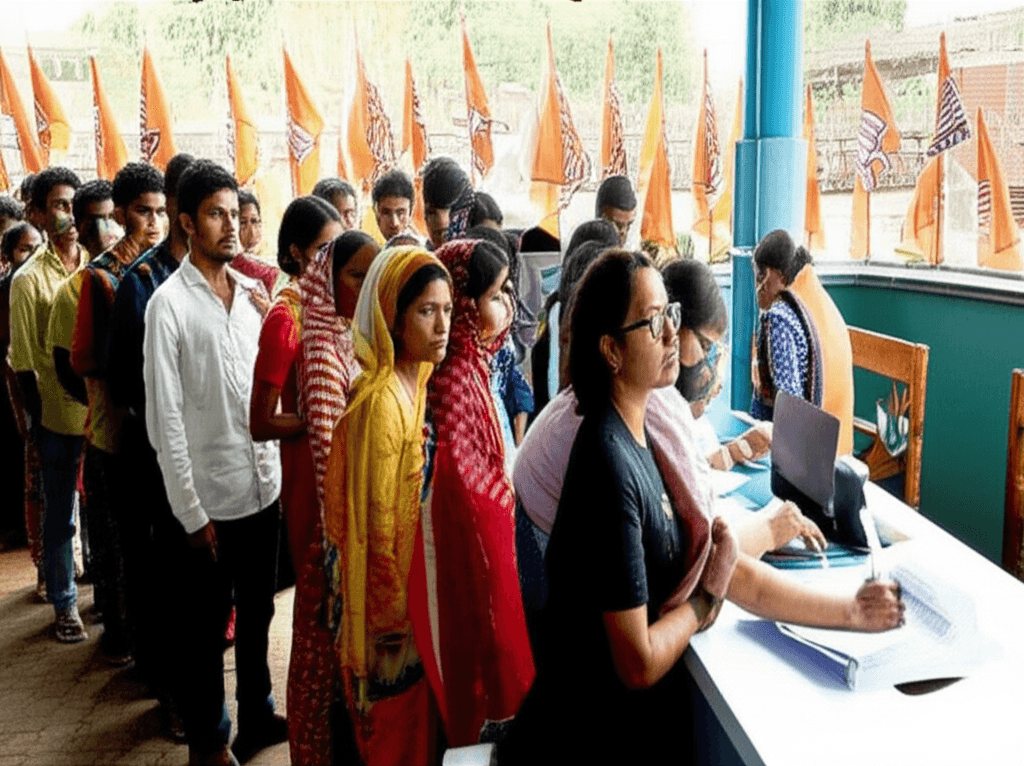
The Crucial Electoral Roll Revision: Why It Matters
In the vibrant, often tumultuous, political arena of West Bengal, every process linked to elections is scrutinized with intense rigor. The latest flashpoint? The ongoing Special Intensive Revision (SIR) of electoral rolls. The Trinamool Congress (TMC), the state's ruling party, has launched a scathing attack on the Election Commission of India (ECI), accusing it of partisan behavior and issuing directives that allegedly benefit the Bharatiya Janata Party (BJP).
For those unfamiliar, the SIR process is fundamental to ensuring fair and accurate elections. It's a period where electoral rolls are updated: new eligible voters are added, existing entries are corrected, and deceased or shifted voters are removed. It's a meticulous, often challenging, exercise that demands absolute neutrality from the electoral machinery. A clean and current voter list is the bedrock of democratic integrity, making the allegations coming out of West Bengal particularly concerning.
West Bengal has a history of highly polarized and intensely contested elections, where even minor perceived discrepancies can escalate into major political controversies. With significant elections on the horizon, the stakes couldn't be higher, and accusations of bias against the EC threaten to undermine public trust in the electoral process itself.
Trinamool's Charges: Unpacking the Allegations
The Trinamool Congress hasn't minced words in its accusations. Senior TMC leaders have publicly stated that the EC, which is constitutionally mandated to be an independent body, is allegedly bowing to pressure from the BJP-led central government. Their specific grievances focus on several key areas concerning the SIR:
- Targeted Deletions and Additions: The TMC alleges that certain directives issued by the EC lead to the disproportionate deletion of voters from specific communities or localities perceived as TMC strongholds, while simultaneously making it easier for new voters aligned with the BJP to be added in other areas. They claim these are not random occurrences but part of a deliberate pattern.
- Lack of Transparency in Scrutiny: Party representatives have pointed to what they see as a lack of transparency in how objections and claims for inclusion/deletion are handled. They argue that their party agents are often not given adequate opportunity to present their cases or challenge decisions made by electoral officers.
- Deployment of Officials: A recurring complaint from the TMC is the deployment of certain district magistrates and police officials whom they accuse of having a pro-BJP leaning. They argue that these officials, under the guise of EC orders, are implementing the SIR process in a way that disadvantages the ruling state party.
- One-Sided Directives: The TMC contends that many of the EC's recent orders, particularly those related to field verification protocols and the timelines for specific actions, appear to be tailored in a manner that creates an unfair advantage for the BJP in areas where they are looking to gain ground.
These accusations aren't entirely new in Indian politics, but their intensity in West Bengal, a state known for its fierce political rivalries, makes them particularly potent. The TMC's narrative is that the very institutions meant to uphold democratic fairness are being compromised, a claim that, if substantiated, would have profound implications for the state's democratic health.
"We have repeatedly brought to the Election Commission's attention the blatant bias in their recent directives. It's clear that certain orders are designed to facilitate the BJP's electoral agenda, especially during this critical voter revision process. This undermines the very foundation of free and fair elections," stated a prominent TMC spokesperson in a recent press briefing.
The Election Commission's Mandate and the Challenge of Impartiality
The Election Commission of India is a constitutional body entrusted with the monumental task of conducting free and fair elections. Its independence is sacrosanct to the integrity of India's democracy. The EC's powers are vast, ranging from delimitation of constituencies and preparation of electoral rolls to the conduct of elections and supervision of political parties.
Maintaining absolute impartiality in a politically charged environment like India, especially in states like West Bengal, is an immense challenge. The EC frequently faces accusations of bias from various political parties, irrespective of who is in power at the center or in the state. Historically, the EC has often had to walk a tightrope, balancing legal mandates with political realities.
Navigating the Scrutiny
The EC typically responds to such allegations by reiterating its commitment to constitutional principles and transparency. They often point to:
- Established Procedures: Emphasizing that all actions, including the SIR, follow well-defined legal frameworks and guidelines, which are publicly available.
- Multi-Party Involvement: Stating that representatives from all recognized political parties are involved in the process at various stages, from observer appointments to scrutiny of final rolls.
- Grievance Redressal Mechanisms: Highlighting the robust system for citizens and parties to file complaints and objections, which are then addressed through due process.
- Independent Observers: Deploying special observers to monitor the process, especially in sensitive areas, to ensure fairness.
However, the perceived independence of the EC remains a topic of frequent debate, particularly when the ruling party at the center is accused of influencing its decisions. This situation in West Bengal adds another layer to that ongoing national conversation. For more insights on political dynamics, you can explore our Politics category.
BJP's Stance: Dismissing the Accusations
Unsurprisingly, the Bharatiya Janata Party has vehemently rejected the Trinamool Congress's allegations. BJP leaders in West Bengal have characterized the accusations as baseless and a desperate attempt by the TMC to deflect from its own governance issues and anticipated electoral setbacks.
Their counter-arguments often revolve around:
- TMC's Own Failings: Accusing the TMC of having allowed errors and malpractices in electoral rolls during their tenure, and now crying foul when a rigorous revision process is underway.
- Standard Procedure: Insisting that the SIR process is a standard, statutory exercise conducted across the country, and any 'orders' from the EC are part of its normal functioning, not partisan intervention.
- Lack of Concrete Evidence: Challenging the TMC to provide concrete, verifiable evidence of bias, rather than making broad, unsubstantiated claims.
- Preventing Electoral Malpractice: Arguing that the EC's actions are aimed at purifying the electoral rolls and preventing the kind of electoral malpractice that has allegedly occurred in West Bengal in the past, often attributed to the ruling party.
The BJP's narrative aims to paint the TMC's complaints as politically motivated tactics designed to create doubt and uncertainty ahead of elections where the BJP hopes to significantly improve its performance.
The Larger Political Chessboard in West Bengal
The electoral accusations in West Bengal are never isolated incidents; they are always interwoven into the state's intricate political fabric. West Bengal has a history of intense political rivalry, often marked by accusations of violence, intimidation, and electoral manipulation. The fierce battle between the TMC and BJP has only heightened these tensions.
Since the BJP's significant rise in the state in recent years, particularly in the 2019 Lok Sabha elections and the hard-fought 2021 Assembly elections, every move by either party, and indeed by statutory bodies like the EC, is viewed through a highly politicized lens. The TMC, having successfully fended off a strong BJP challenge in 2021, is acutely aware of the need to maintain its electoral stronghold and views any perceived external influence as a direct threat.
The SIR, in this context, becomes more than just an administrative exercise; it becomes a battleground for political control. Accurate electoral rolls can swing an election by ensuring genuine voters are included and fraudulent ones are excluded. Therefore, any move that potentially alters the voter base is seen as a strategic play.
Implications for Democratic Trust and Future Elections
Allegations of bias against the Election Commission are serious because they strike at the heart of democratic legitimacy. If citizens lose faith in the impartiality of the electoral umpire, it can lead to widespread disillusionment and even instability. In a country as diverse and populous as India, the EC's perceived neutrality is paramount for maintaining social cohesion and democratic order.
Potential Repercussions:
- Erosion of Public Confidence: Repeated accusations, even if unproven, can chip away at public trust in democratic institutions, making people question the fairness of election outcomes.
- Increased Political Volatility: Such allegations can fuel political unrest and create a more volatile pre-election atmosphere, potentially leading to increased skirmishes and law and order challenges.
- Legal Challenges: If the TMC's allegations gain traction, it could lead to further legal challenges or petitions, potentially delaying or complicating the electoral process.
- International Scrutiny: While internal matters, significant controversies surrounding electoral fairness can attract international attention, impacting India's democratic image globally.
The EC's challenge now is not just to conduct a flawless SIR but also to actively reassure all stakeholders of its unwavering impartiality. This often involves greater transparency, proactive communication, and swift, unbiased action on all complaints.
What Happens Next?
As the SIR process continues, the political rhetoric is likely to intensify. The TMC will likely continue to press its case, potentially submitting further memorandums to the EC or even considering legal avenues. The BJP, on its part, will likely maintain its defensive posture, dismissing the claims as politically motivated.
The ball is now firmly in the Election Commission's court. How it addresses these serious allegations – whether through detailed clarifications, transparent investigations, or observable actions – will be crucial in restoring confidence and ensuring that the upcoming elections in West Bengal are perceived as free, fair, and credible. The integrity of the electoral roll is not merely an administrative detail; it is a fundamental pillar of democratic governance.
Monitoring the EC's response and the subsequent political developments will be vital to understanding the trajectory of West Bengal's electoral future. It's a reminder that democracy isn't a static concept; it's a dynamic process that requires constant vigilance and an unwavering commitment to fairness from all parties involved.
Comments
Loading comments...
Related Articles

Olivia Nuzzi's 'American Canto': A Deep Dive into Her Highly Anticipated New Book
Political journalist Olivia Nuzzi is set to captivate readers with her new book, 'American Canto,' promising an unfiltered, deeply immersive journey into the heart of contemporary American politics. This article explores Nuzzi's distinctive voice, her career trajectory, and the profound themes readers can expect from her latest literary endeavor.